At the end of this month we had the ITCamp Community Event. This was the last event for this year, so we decided to do something special. In comparison with our past events, we tried to focus more on devices and hardware. We even managed to have a session where HoloLences were presented live - such a cool and interesting presentation.
The event was fully sponsored by Endava. A big thank you for them. Without local IT companies, we wouldn't be able to organize this events.
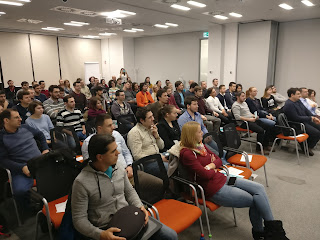
There were more than 80 people that participate at the event. I'm happy to meet people that are interested to find out more about new technologies and trends. Nowadays staying up to date with all the new technologies and trends is hard and time consuming. This is way I'm such a big fun of this kind of meetings.
The community event had 3 speakers that talk about System Development, Raspberry PI and Azure IoT and HoloLences. You can find more about each session below:




The event was fully sponsored by Endava. A big thank you for them. Without local IT companies, we wouldn't be able to organize this events.
There were more than 80 people that participate at the event. I'm happy to meet people that are interested to find out more about new technologies and trends. Nowadays staying up to date with all the new technologies and trends is hard and time consuming. This is way I'm such a big fun of this kind of meetings.
The community event had 3 speakers that talk about System Development, Raspberry PI and Azure IoT and HoloLences. You can find more about each session below:
- Systems Development in a Changing World (Eoin Woods): The way we build systems is changing. From our history of monolithic systems, then distributed systems, to Internet connected systems, we are now entering the era of cloud-hosted, microservice based, pay-for-usage system development. What does the history of software development tell us about the challenges of this new environment? And how does our approach to building systems need to evolve in order to meet them?
- Empower your Raspberry PI using Azure IoT Suite (Radu Vunvulea): What can you do with smart devices nowadays? In the next 45 minutes we will take a look on what we can do With Raspberry PI and how this device can become the brain of an intelligent house or office. The session will contain a lot of demos explaining what we can do to empower this smart device with the IoT Intelligence on top of Azure. We will also use NodeJs and C++ beside C# code.
- Augmented Reality in Industrial Predictive Maintenance, including HoloLens (Tibor Molnar): Industry 4.0 comes with interconnected machines using IoT, cloud computing and machine learning (beside many other things). We at iQuest are working on an end to end IoT solution architecture which includes gateways for devices, IoT hubs, maintenance case predictions, real time business intelligence and augmented reality support for devices maintenance and predictive maintenance. Additionally, we are testing Augmented Reality to provide a better experience and support for field engineers doing devices maintenance work. This session will present high level an example IoT architecture, then will focus on details regarding how to implement holographic and object augmentation experiences in devices maintenance using Microsoft Hololens, Unity, Visual Studio and the PTC Vuforia platform.


Comments
Post a Comment